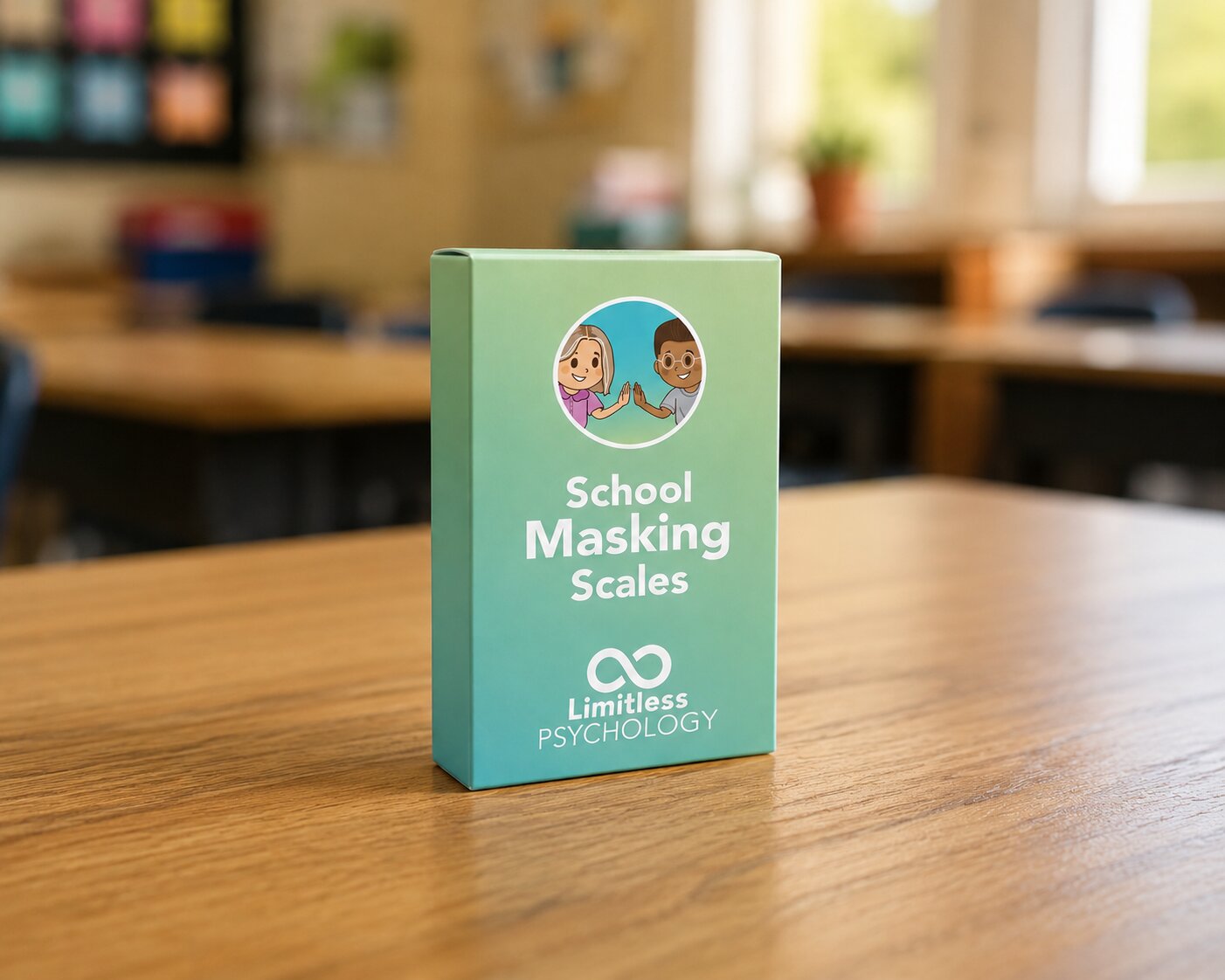
 School Masking Scales
Understanding how children really feel in school.
The School Masking Scales help psychologists, families, teachers, and other professionals explore patterns of masking in educational settings.
free
 About the scales
Developed by educational psychologists.
The School Masking Scales were developed to support richer understanding around school masking, emotional wellbeing, identity, and adaptation within educational settings.
The framework is grounded in evidence-based practice and has been developed over a period of years by Dr Lucy and Dr Joe.


“Masking is often misunderstood because many children appear to cope externally while struggling internally.”
Created by Dr Lucy & Dr Joe, educational psychologists and co-directors of Limitless Psychology.
How the cards workA structured, person-centred exploration.
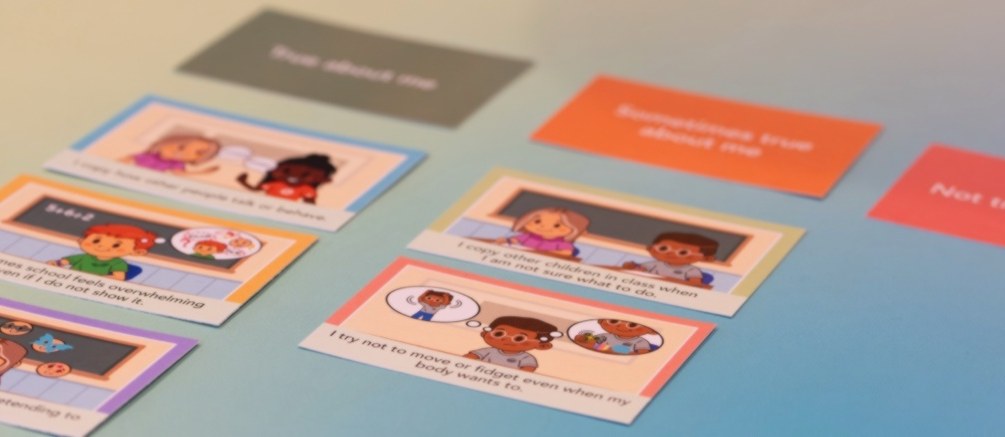
The card sort is designed to support careful, compassionate understanding. It is not a test, and there are no right or wrong answers — the School Masking Scales can support a sensitive conversation, or can equally be completed without talking.
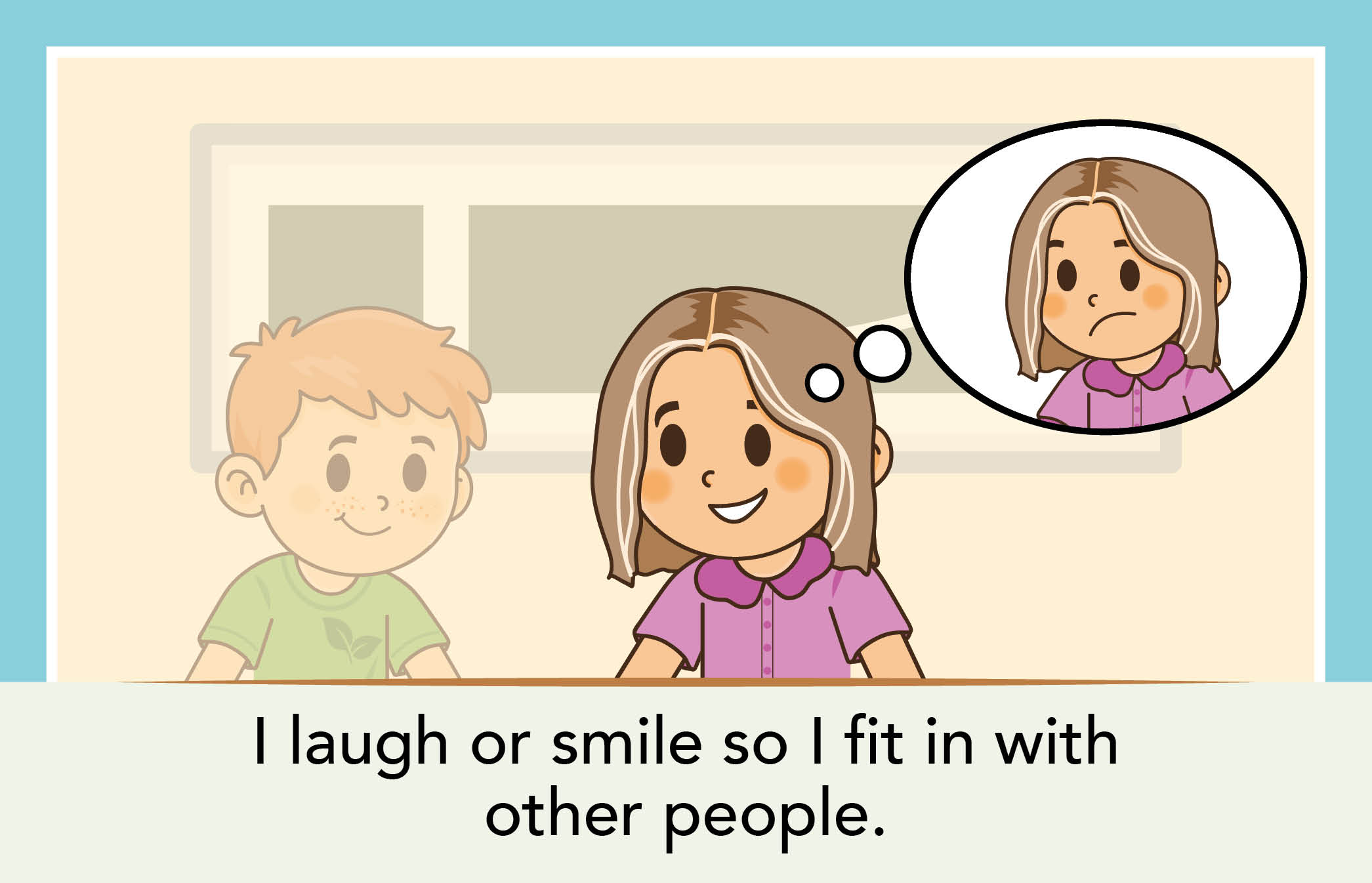
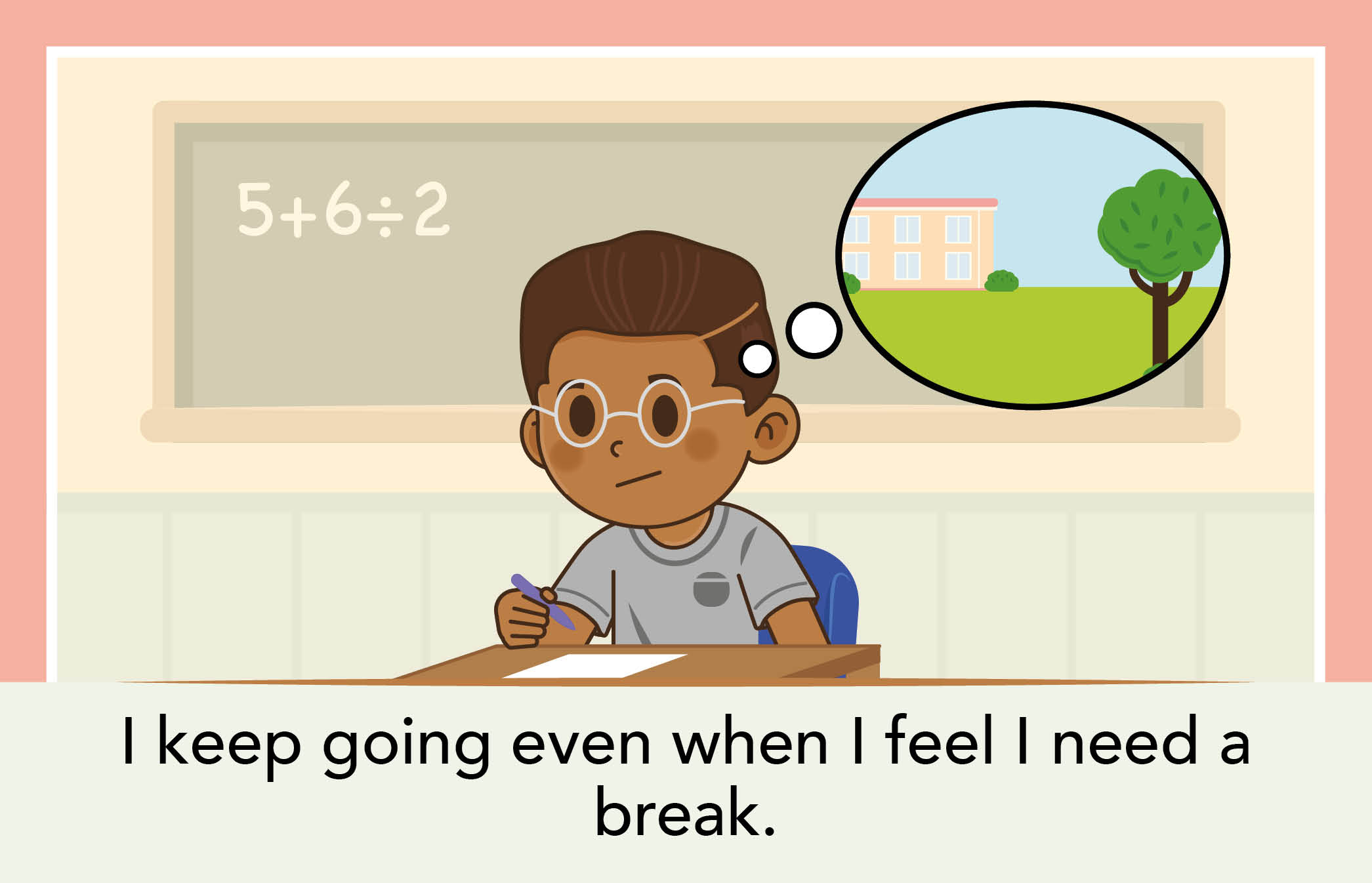
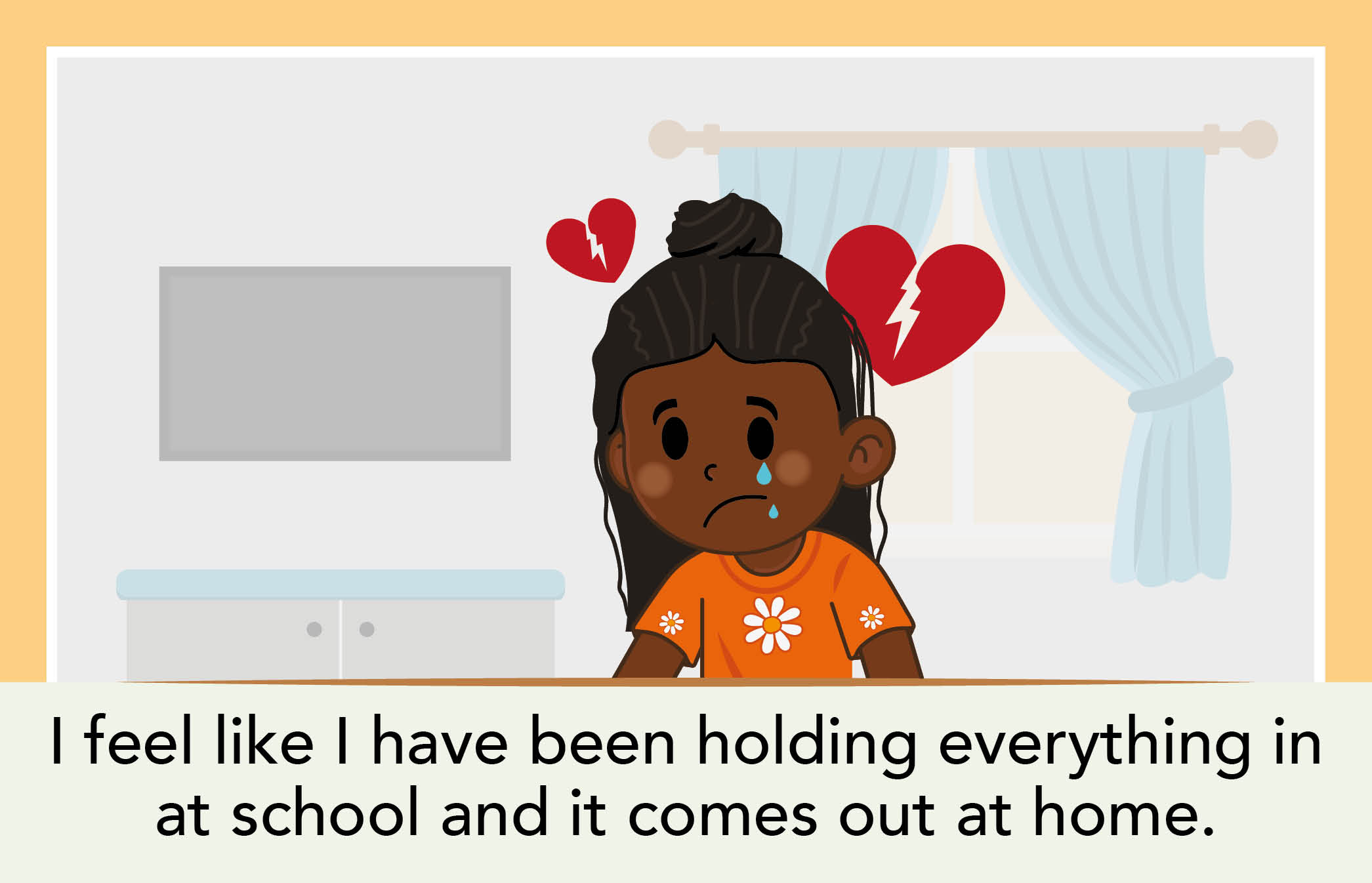
Introduce the cards
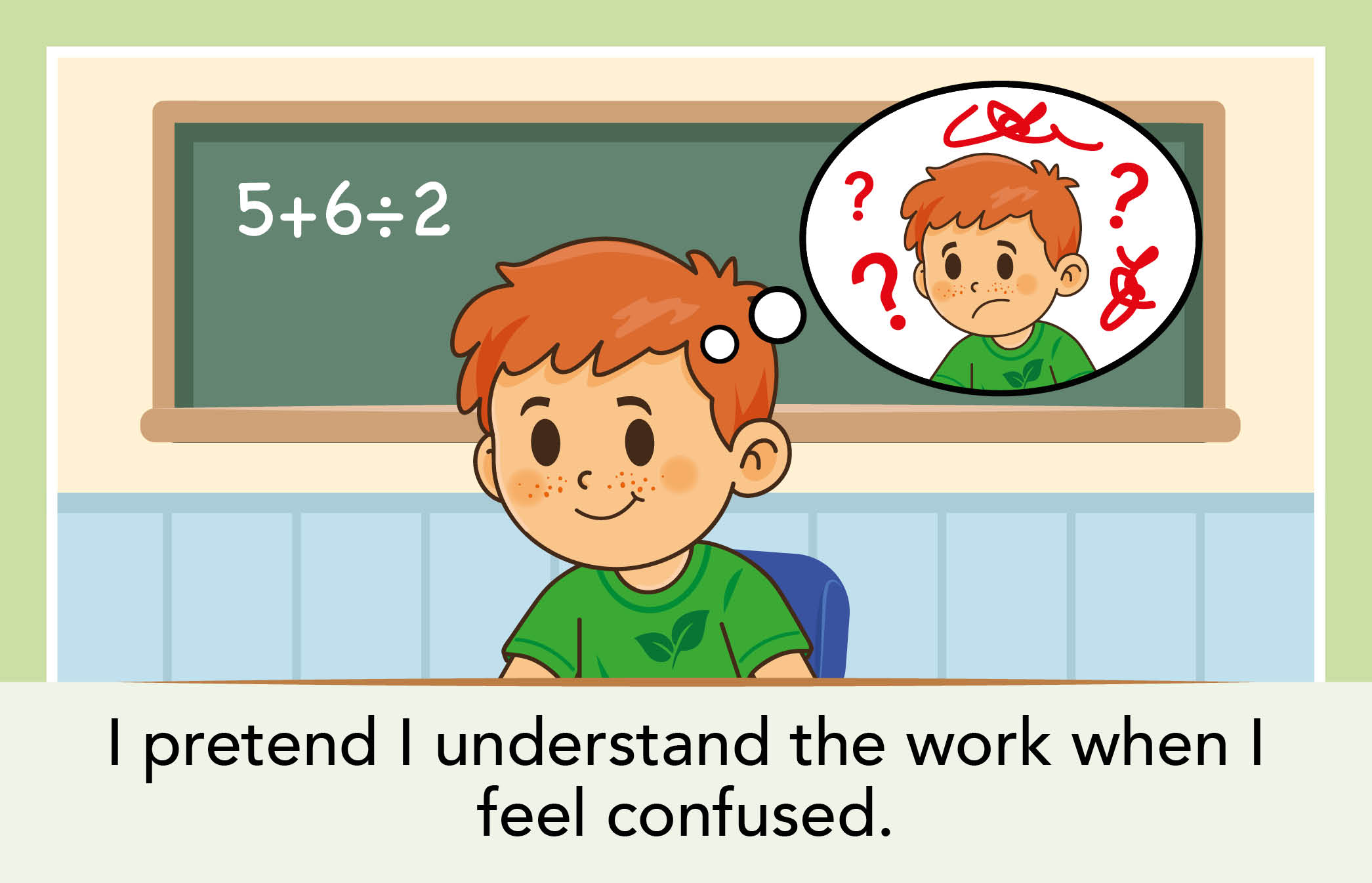
Show the child the cards and explain that each one describes something children sometimes do or feel at school. Reassure them that there are no right or wrong answers, and that they can take all the time they need.
One card at a time
You or the child reads a card aloud. Take time to think about it together — what does it describe, does it match their experience at school, and how does it make them feel?
Talk, or don't talk
The activity can be completed verbally — talking through each card and explaining placements — or non-verbally, by simply sorting cards into True, Sometimes true, or Not true. Silence is just as valid as conversation.
Interpret the findings
Once the cards are sorted, use our comprehensive online services to generate a School Masking Profile across the five domains, and produce an instant report with recommendations to share with families, schools, and other professionals.
The frameworkFive interconnected domains.
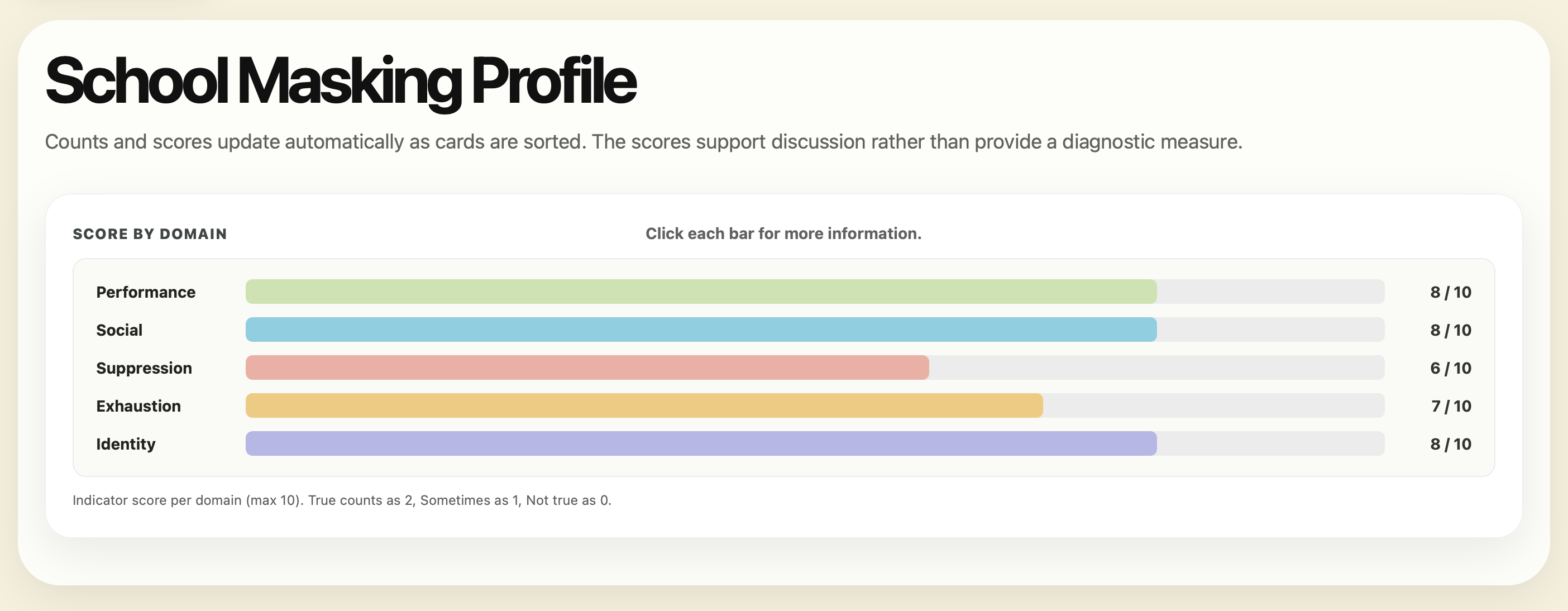
The scales explore different ways children and young people may adapt, camouflage, suppress, or cope within school environments. The Web App builds a live School Masking Profile as cards are sorted, ready to include in the downloadable PDF report.
School Masking Profile
Score reflects the number of statements endorsed in each masking domain (out of a maximum of 10).
Click each tile to find out more.
How some children hide difficulties with their learning behind an appearance of coping.
How some children manage social situations — monitoring, copying, rehearsing, and trying to fit in.
How some children hold in emotions, behaviours, and sensory needs to mask distress at school.
The emotional and physical toll of sustained masking, often surfacing once a child feels safe.
How masking can affect a child’s sense of self — feeling different, or unable to be themselves.
Online serviceA digital companion to the card pack.
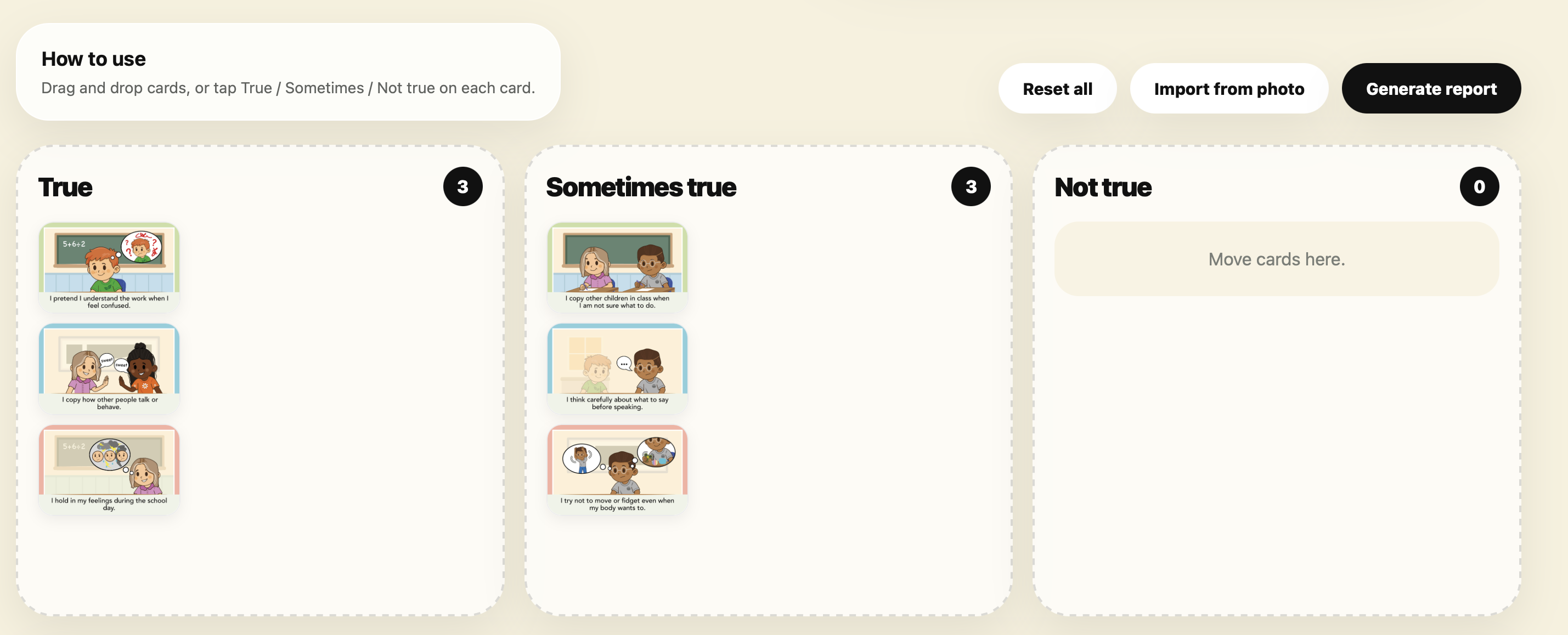
Subscribers to the Web App can run the full card sort online, build a live profile across the five domains, import photos of physical card layouts, and generate detailed reports with recommendations.
Click each tile to find out more.
Interactive Web App
Sort all 25 statements into True, Sometimes true, and Not true — exactly like the physical pack, but online and accessible on any device with a browser.
School Masking Profile
A live visual breakdown updates as cards are sorted: a bar chart of scores across all five domains, plus per-domain summary cards that expand for deeper exploration.
Report generation
One click produces a comprehensive report: per-domain narratives, detailed recommendations, and discussion points for further exploration.
Upload your own image
Take a photo of your physical card layout and import the responses straight into the Web App. AI vision identifies every card and where it's placed — review and adjust before applying.
Recommendation engineThoughtful recommendations, powered by our bespoke engine
The School Masking Scales Recommendation Engine uses a multi-layered decision-making process to analyse patterns across a child or young person’s responses, considering the strength, frequency, and interaction of responses both within and across domains. Rather than relying on simple totals or individual scores, it evaluates combinations of indicators to identify areas of strength, difficulty, and potential concern. These response patterns are then systematically matched against an extensive evidence-informed recommendation and discussion framework to generate tailored recommendations and reflective questions that support understanding, guide conversations, and inform practical strategies for home, school, and professional settings.