 Research
Evidence behind the School Masking Scales.
An evidence-informed explanation of the School Masking Scales: the five domains of Performance, Social, Suppression, Exhaustion and Identity, and how they relate to research on masking and camouflaging in education.
- What is school masking?
- Why masking matters for schools
- How the academic literature maps onto the School Masking Scales
- The five domains in detail
- School belonging, anxiety and the educational context
- Masking beyond autism
- Potential misconceptions about masking in schools
- What the scales are and are not
- Conclusion: looking beyond surface presentation
- References
What is school masking?
School masking refers to the effort and strategies a child or young person uses to appear to be coping at school while internally experiencing confusion, anxiety, overwhelm, social uncertainty, or exhaustion.
The term contextualises the concept of masking (which can also be referred to as camouflaging) drawn from the wider academic literature, to understand how masking influences a child or young person’s experience of school. Within the research, masking is commonly described as someone using strategies to hide, compensate for, or reduce the visibility of autistic characteristics and social difficulties (Hull et al., 2017; Hull et al., 2019; Cook et al., 2021). A thematic analysis by Hull et al. (2017) involving 92 autistic adults described camouflaging as involving a combination of masking and compensation techniques, including copying others, monitoring situations and behaviours, preparing ‘scripts’ and rehearsing responses, and concealing difficulties. Hull et al. (2019) went on to develop the Camouflaging Autistic Traits Questionnaire (CAT-Q). This is a self-report measure developed for adults which separates camouflaging into three factors: Compensation, Masking and Assimilation.
Why masking matters for schools
Masking is important for school settings to consider as a child or young person’s observable behaviour may not reflect the effort that they are using each day. Research conceptualises this in terms of an internal-external discrepancy, where someone’s observable behaviour and presentation can differ from their internal experiences (Lai et al., 2017; Cook et al., 2021). Although some strategies used to aid masking may be observable, the difficulties being concealed and the cognitive and emotional effort may not be readily apparent to others.
In the classroom, a pupil may look calm, compliant, sociable, or academically successful while experiencing significant internal difficulties, with masking strategies helping to hide this from those around them. This may contribute to a discrepancy between how a child is seen within school and their experience outside of school.
For schools, this matters because masking can help explain why some pupils:
- Appear to cope in school but become exhausted or distressed at home.
- Avoid asking for help despite being confused or overwhelmed.
- Present as being socially successful but experience high levels of anxiety.
- Meet behavioural expectations while suppressing sensory, emotional or movement needs.
- May experience burnout over time based on qualitative accounts from autistic adults (Raymaker et al., 2020).
Research reviews have linked camouflaging with poorer mental health and wellbeing outcomes, including anxiety, depression, stress, and exhaustion (Cook et al., 2021; Zhuang et al., 2023).
There are also clear implications for school attendance. In a UK-based survey exploring school distress and difficulty attending school, 92.1% of children and young people experiencing school distress were described as neurodivergent, with 83.4% described as autistic (Connolly et al., 2023). Although this study did not examine masking directly, the findings highlight the significant emotional distress that can accompany difficulties attending school. Where attendance itself is not yet affected, this distress can be far less visible in school, and masking offers one plausible explanation for how a pupil can appear to manage while struggling.
Much of the existing evidence in this area is cross-sectional and relies on self-report, meaning that it primarily demonstrates associations rather than establishing causal relationships. This is an important limitation when considering how masking relates to children’s experiences and outcomes.
The School Masking Scales are designed to support conversations about this hidden effort. They are not intended to diagnose or pathologise behaviours. Their purpose is to help pupils, families, schools, and professionals notice patterns that may otherwise remain invisible.
How the academic literature maps onto the School Masking Scales
The five domains were informed by the research summarised on this page, alongside educational psychology practice and the experiences of children and young people in school settings.
The table below outlines how each domain relates to the existing academic literature, and identifies where the School Masking Scales extend or adapt existing concepts for use within educational settings.
| DOMAIN | RELEVANT LITERATURE | IMPORTANT DISTINCTION |
|---|---|---|
| Performance | Compensation and the discrepancy between outward presentation and underlying difficulty, and concealment of learning needs (Livingston & Happé, 2017; Hull et al., 2019; Livingston et al., 2019; Halsall et al., 2021). | The compensation literature primarily concerns social and cognitive difficulties. The School Masking Scales extend this concept, largely by analogy, to schoolwork, help-seeking, and classroom performance. |
| Social | Copying and imitation, rehearsing, monitoring social behaviour, fitting in and assimilation (Hull et al., 2017; Hull et al., 2019; Tierney et al., 2016). | The domain is most directly aligned with the established camouflaging literature, which has primarily examined social presentation and interaction. |
| Suppression | Suppressing, concealing and controlling behaviours and responses, including movement and emotional expression (Hull et al., 2017; Howe et al., 2023). | The literature primarily examines suppression of autistic characteristics, particularly in social contexts. The School Masking Scales broaden this to school-day self-regulation and behavioural expectations. |
| Exhaustion | Cognitive, emotional and wellbeing costs of sustained masking and camouflaging, including exhaustion, stress and the need for recovery (Cook et al., 2021; Cage & Troxell-Whitman, 2019; Zhuang et al., 2023; Raymaker et al., 2020; Howe et al., 2023; Halsall et al., 2021). | Extends the literature on masking-related costs to include both in-school exhaustion and post-school recovery. |
| Identity | Authenticity, self-concept, stigma and pressure to appear acceptable (Bargiela et al., 2016; Perry et al., 2022; Pearson & Rose, 2021; Howe et al., 2023). | The literature highlights authenticity and pressure to conform. The School Masking Scales extend this to whether pupils feel able to be themselves within school. |
The five domains in detail
Performance: hidden academic coping and classroom compensation
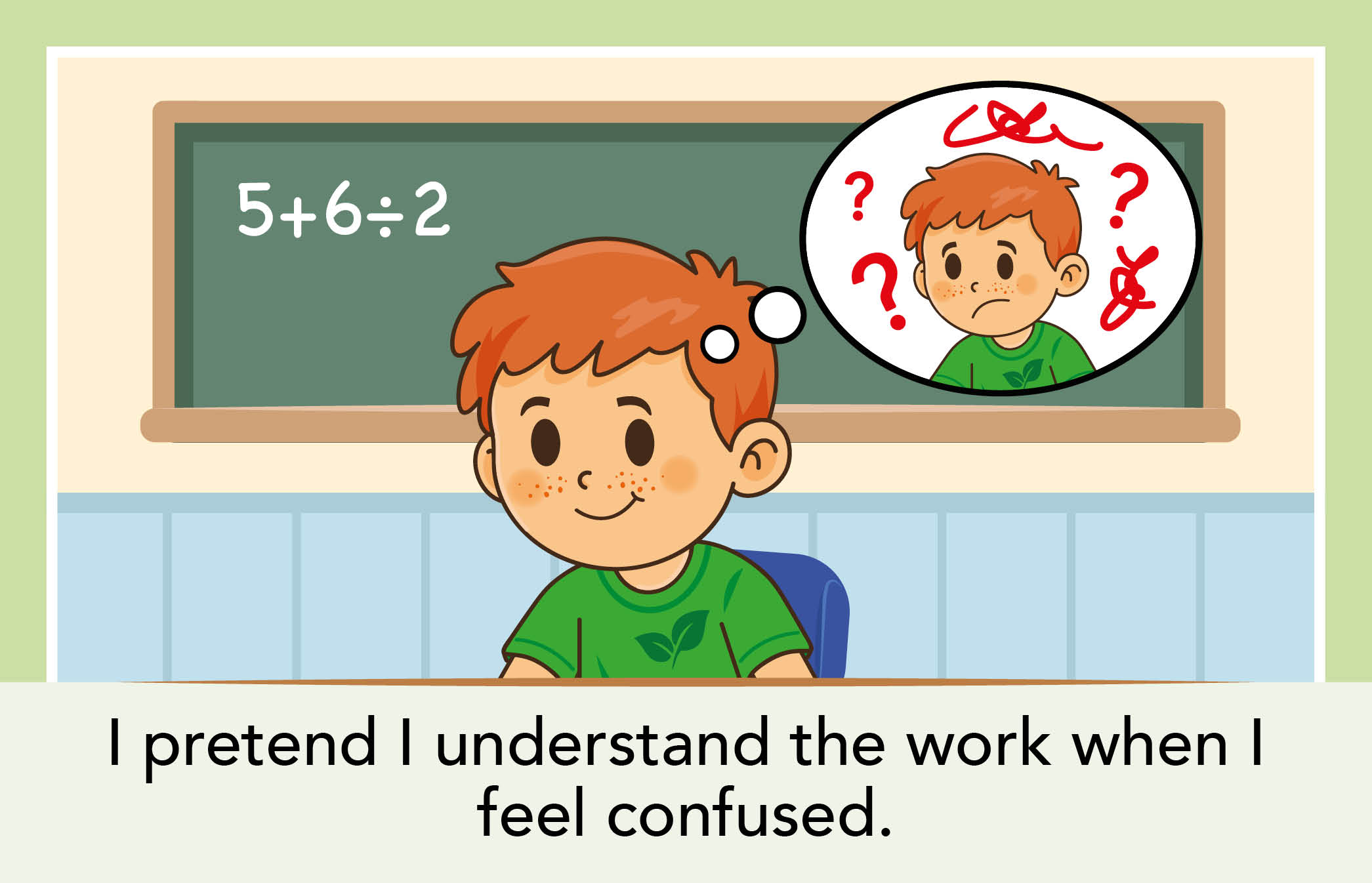
The Performance domain explores whether a pupil may hide confusion, copy others, avoid asking for help, or try to appear as though they understand the work. These behaviours can let a pupil appear academically capable, even while they are finding the work hard. What they may be struggling with is often not easy for others to see. The domain draws on the idea of compensation. Livingston and Happé (2017) described compensation as the processes that can make someone's outward behaviour look stronger than their underlying difficulty. Hull et al. (2019) made a similar point, identifying compensation as one part of camouflaging, where a person uses strategies to make up for social difficulties.
There is also more direct evidence from schools. Halsall, Clarke and Crane (2021) interviewed adolescent autistic girls, who described hiding their learning needs. The girls talked about covering up when they were finding the work hard, and about worrying that they would seem less able than their peers. This fits closely with the Performance domain. It suggests that some pupils can mask academic difficulty in this way.
Strategies like these can make a pupil's outward presentation look stronger than the difficulty they can be experiencing. The School Masking Scales take this principle into the classroom, applying it to schoolwork, to asking for help, and to how a pupil comes across academically.
Social: fitting in, copying and managing peer interaction
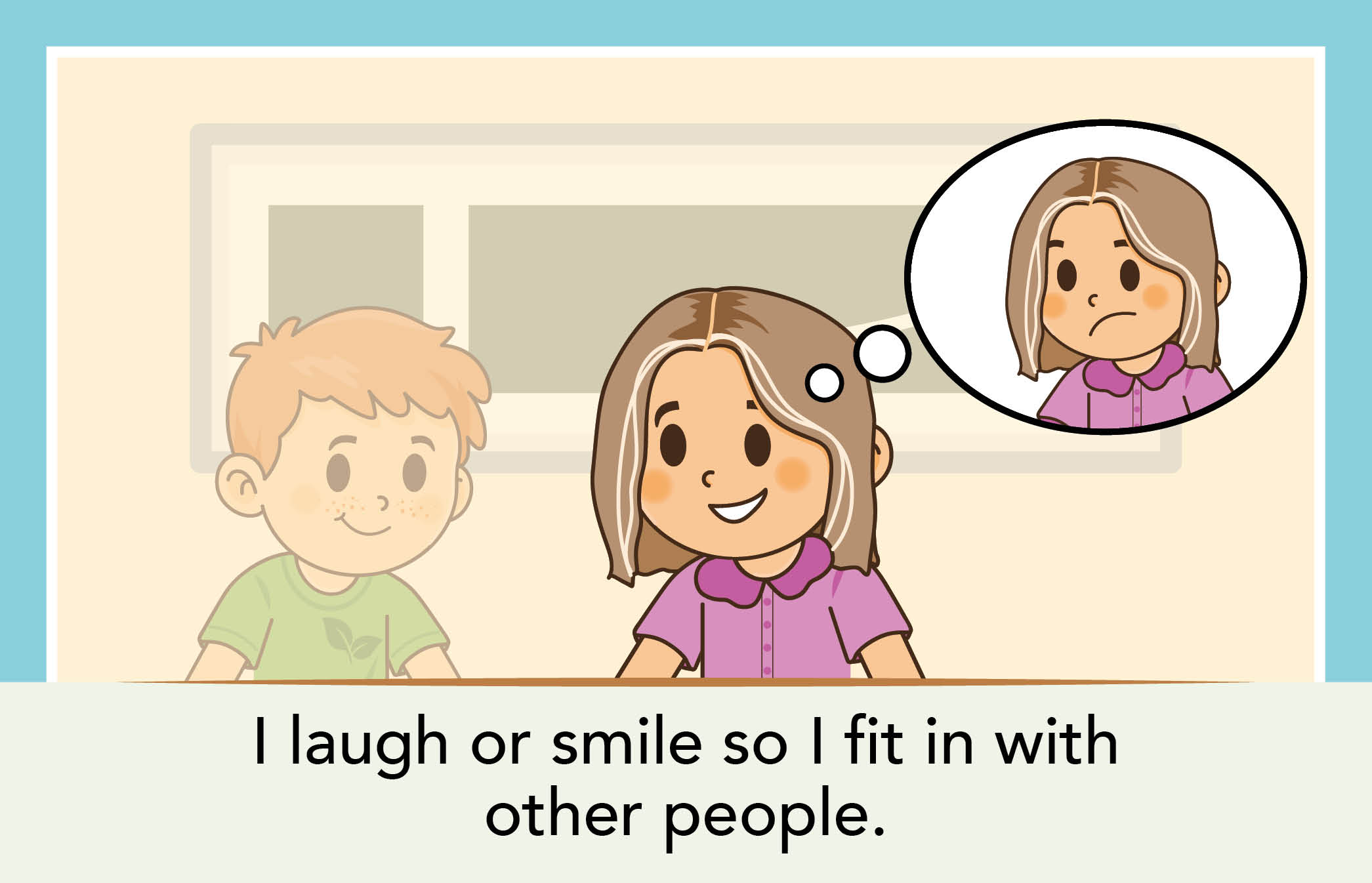
The Social domain explores whether pupils monitor, adapt or modify their social behaviour. Hull et al. (2017) interviewed autistic adults who described social masking strategies including watching other people, copying how they behaved, rehearsing interactions, and monitoring how they came across. This was conceptualised as assimilation. Hull et al. (2019) extended this into the CAT-Q, naming assimilation as the effort to fit in with others. Tierney, Burns and Kilbey (2016) interviewed ten autistic adolescent girls. The girls wanted friendships, but found their social environment uncertain and exhausting. They described the strategies they used to cope with this.
Copying, rehearsing, monitoring, and fitting in are all well described in the research as aspects of social camouflaging. The School Masking Scales put these ideas into child-friendly statements, focused on friendships and social life at school.
Suppression: holding in feelings, movement needs and visible distress
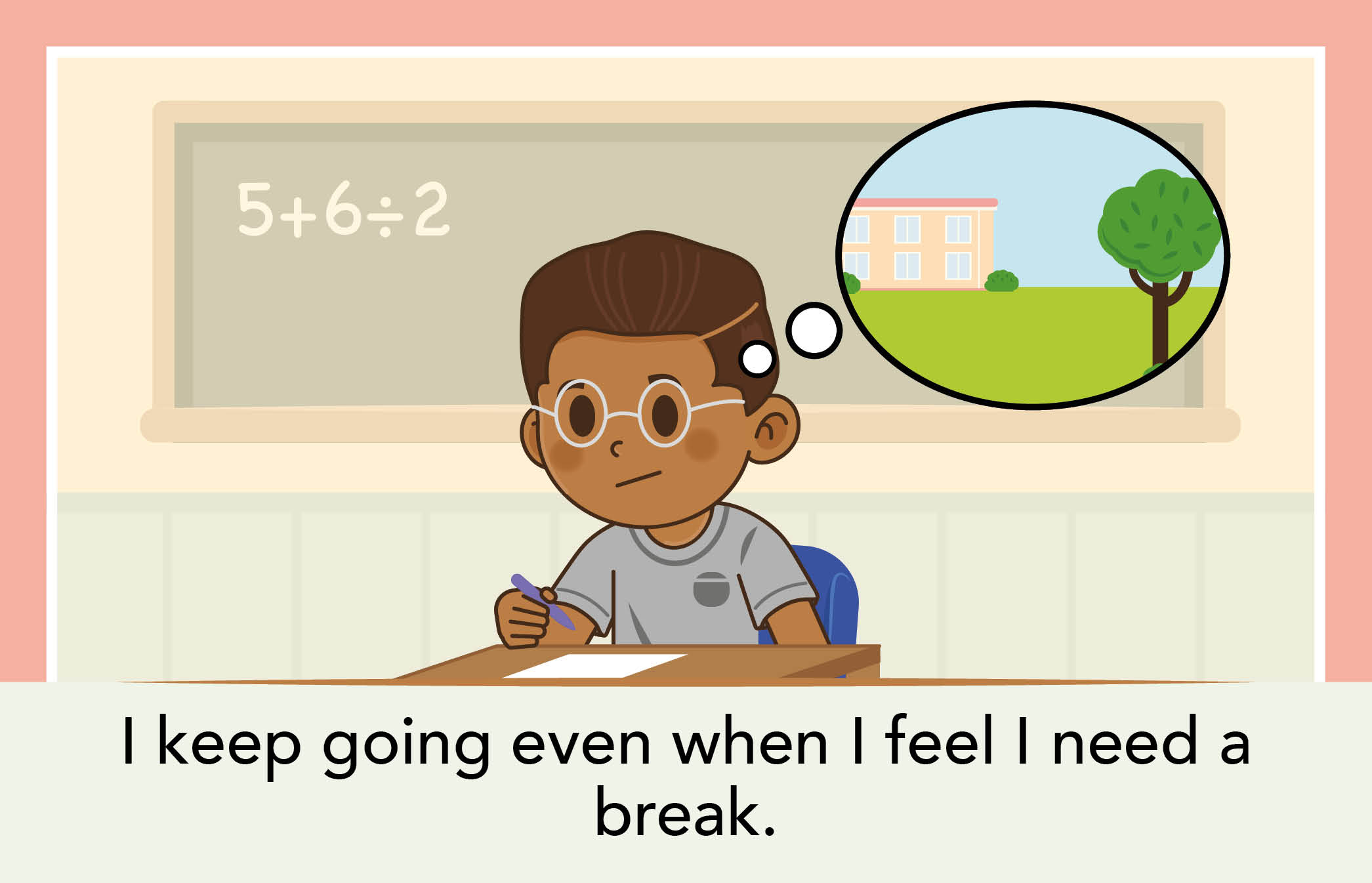
The Suppression domain explores whether pupils feel they need to hold in emotions, movement, or sensory needs. A pupil who is doing this can look calm and settled, while underneath they are working hard to keep everything in.
Suppression is documented within Hull et al. (2017), who described masking as the ways people hide, hold back or control their behaviour, such as holding in stimming or a reaction when the sensory environment feels overwhelming. Howe et al. (2023) found the same in children. In their study of eight autistic children and adolescents aged 10 to 14, the children described holding back behaviours such as stimming, and hiding parts of themselves. For some, this had become automatic, rather than something they chose to do.
The School Masking Scales take this into the school day. They ask whether a pupil holds in their emotions, their movement, or their need for support, and what it costs them to keep that up.
Exhaustion: the hidden effort of school and the need to recover
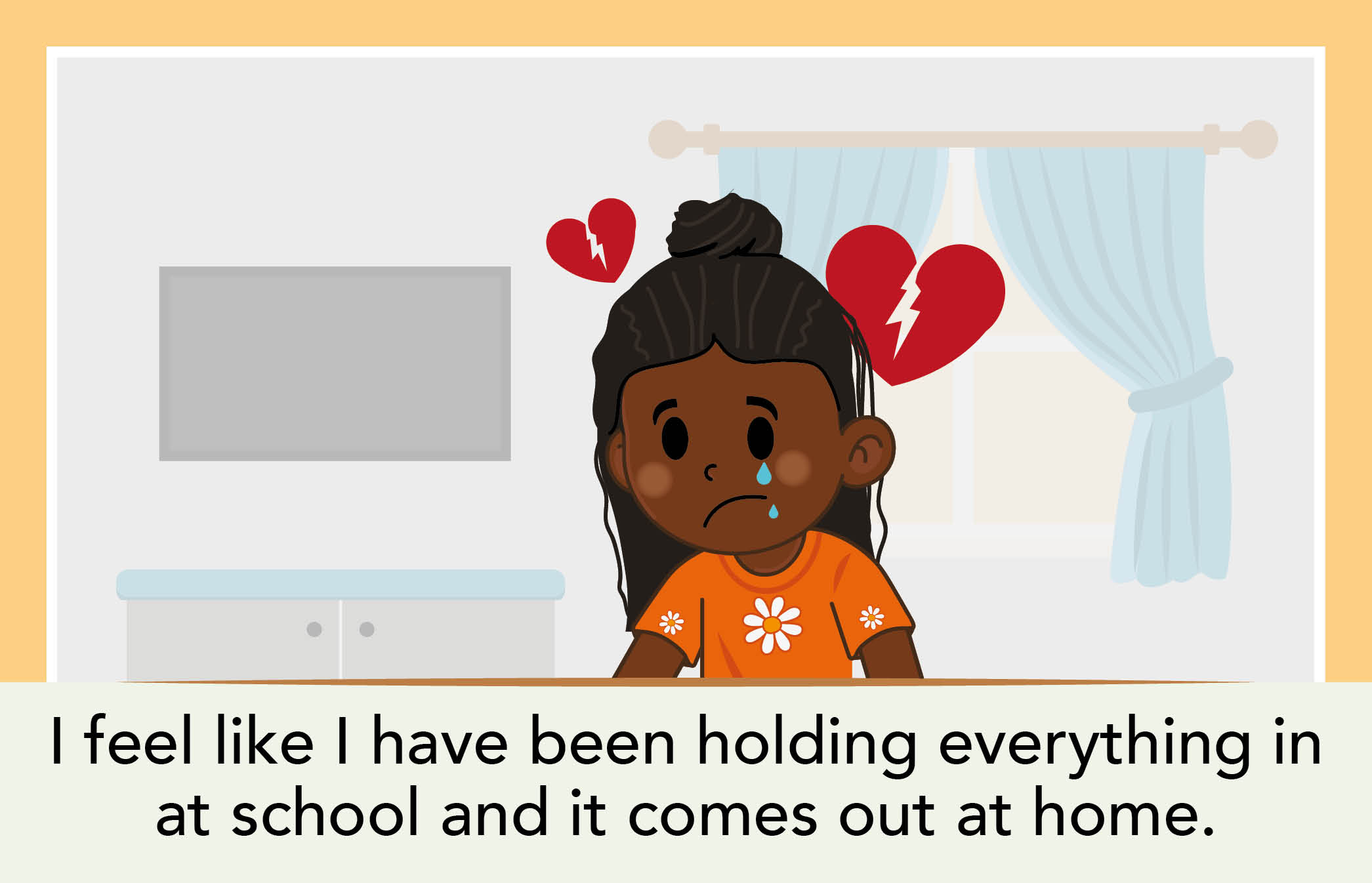
The Exhaustion domain is about what masking costs a pupil, both during the school day and afterwards. It looks at whether school feels tiring or overwhelming, and whether a pupil needs time to recover once the day is over. A pupil might hold everything together at school, and only show how hard it has been once they are safely at home.
This area considered research linking camouflaging with poorer wellbeing. Cook et al. (2021) reviewed 29 quantitative studies and found that higher camouflaging tends to go with poorer mental health. Cage and Troxell-Whitman (2019) reported the same pattern in 262 autistic adults. This was the case whether they camouflaged across most situations or varied it from one to another. Zhuang et al. (2023) looked at 58 studies, and identified feeling overlooked, under-supported, and burnt out among the consequences. Raymaker et al. (2020) described autistic burnout from the accounts of autistic adults. They characterised it as long-term exhaustion, a loss of skills, and becoming less able to cope with everyday demands. It built up when stresses mounted without enough support. The adults linked their recovery with being accepted, having less expected of them, and being able to unmask.
The same appears in studies with children. Howe et al. (2023) found that, for autistic children and adolescents aged 10 to 14, camouflaging could be stressful and draining, and the children said they needed time to recharge afterwards. Halsall, Clarke and Crane (2021) saw it in school too. One educator described a girl who seemed exhausted when she came back to the resource base. One of the girls talked about hiding her anger at school, and being angrier once she got home.
The School Masking Scales take this into the school day and the hours after it. They ask whether school itself takes a lot of energy, whether a pupil needs time on their own afterwards, and whether what they have held in at school comes out at home.
Identity: the difference between the school self and the real self
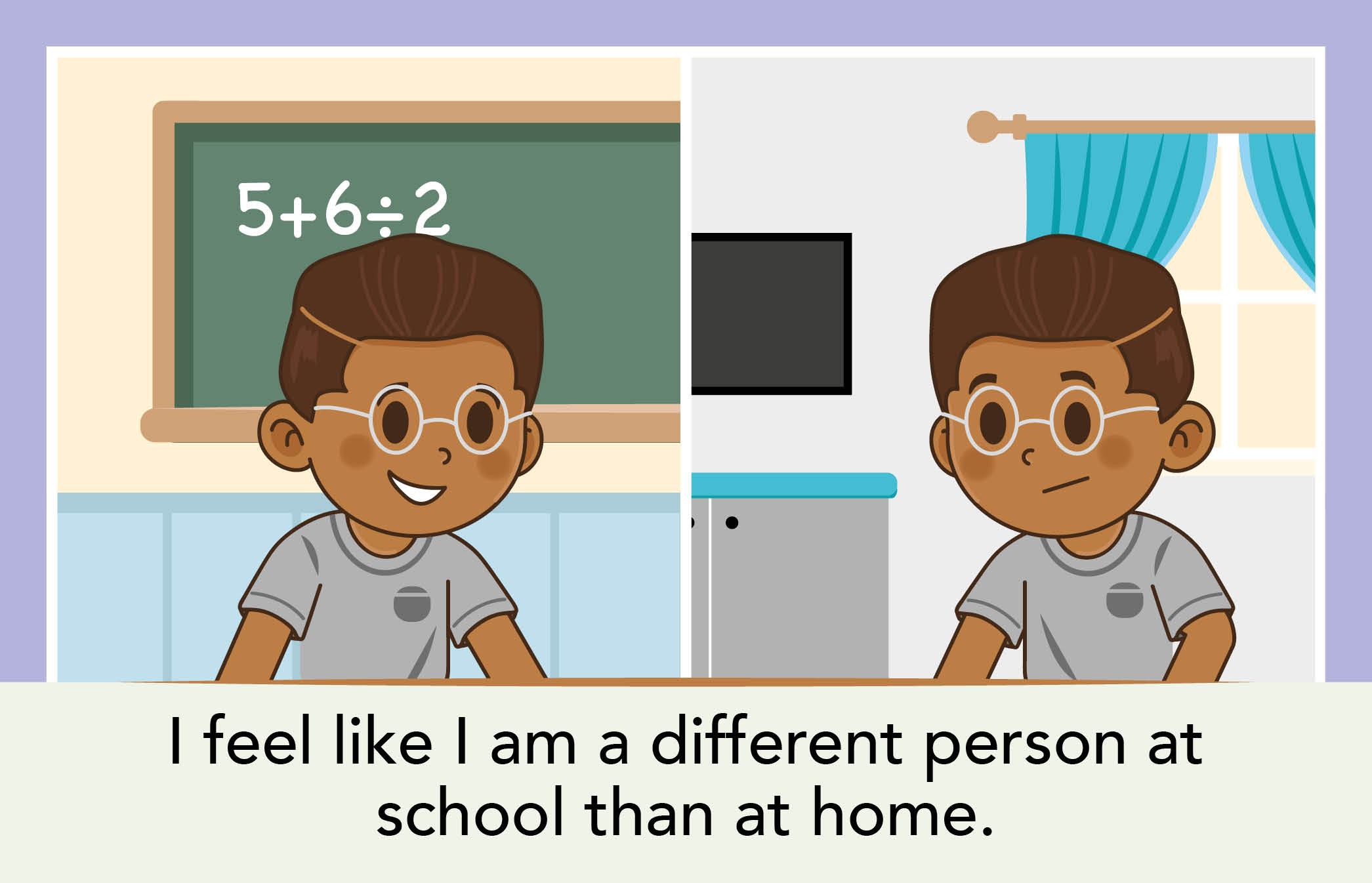
The Identity domain explores whether pupils feel able to be themselves at school, or whether they feel pressure to present themselves in a different way. It draws on research into masking, identity, and perceived pressures to fit in. Bargiela, Steward and Mandy (2016) interviewed fourteen late-diagnosed autistic women, aged 22 to 30. The women described 'pretending to be normal', and the strain of the gap between who they were and how they felt they were expected to behave. Pearson and Rose (2021) framed masking as a response to stigma and to social and environmental pressure, rather than a free choice. Howe et al. (2023) showed that children and adolescents can describe their own camouflaging, and how it relates to their sense of who they are.
The School Masking Scales aim to explore a pupil’s sense of identity within a school-based context.
School belonging, anxiety and the educational context
Masking behaviours can be shaped by the environment and whether a pupil feels they belong. Atkinson, Wright and Wood-Downie (2026) looked at school belonging, camouflaging and anxiety in 72 autistic students aged 11 to 16, in mainstream schools across the UK and Ireland. They found that the less a pupil felt they belonged, the more they tended to camouflage, and the more they camouflaged, the higher their anxiety. This indirect link, from belonging through camouflaging to anxiety, was statistically significant.
Halsall, Clarke and Crane (2021) show that masking can look different to a pupil than it does to the adults around them. They interviewed eight adolescent autistic girls, along with their mothers and educators. Most of the girls said they camouflaged across the different parts of school life. The adults, though, thought the girls needed to camouflage less in the specialist resource base. The girls also talked about hiding when they were struggling with work, and about not wanting to look less able than their peers.
This shapes how the School Masking Scales work. They treat masking as something shaped by the school a pupil is in, not just by the pupil. And they put real weight on the pupil's own account, alongside what the adults around them notice. A pupil may be masking in ways the adults have not seen.
Masking beyond autism
Masking and camouflaging have been studied mainly in autistic people, where they have been looked at in the most depth. The experiences the School Masking Scales describe are not unique to autistic pupils. The scales are worded to capture what it is like to work hard to appear okay, to fit in, or to manage how one comes across, whatever a pupil's diagnosis, or whether they have one at all.
Two studies show this directly. McKinney et al. (2024) looked at 119 girls aged 11 to 14, both neurodivergent and neurotypical. Camouflaging showed up in both groups, and higher camouflaging was strongly linked with anxiety and depression in both. Hull et al. (2020) found self-reported camouflaging in autistic and non-autistic adults alike, though levels were higher in autistic women than in autistic men. Masking is not, then, something only autistic people do.
There is a bigger idea behind this. Autistic traits are widely understood to run along a continuum across the whole population, rather than marking a sharp line between autistic and non-autistic people (Hull et al., 2017). Camouflaging seems to work in the same way. Hull et al. (2019) note that everyone has some level of autistic traits, and that those with more of them may camouflage more too. Seen like this, the behaviours in the School Masking Scales are not unique to autism, or to any diagnosis. They are ordinary ways of managing how one comes across, and any pupil may use them. What changes from one pupil to the next is not whether they can mask, but how much effort it takes, how long they keep it up, and what it costs them.
Masking is also shaped by who a pupil is. Nelson and Lichwa (2025) spoke with four Black autistic girls, aged 16 to 17, in UK education. The girls described how their masking was shaped by race, gender and autism together. This is a reminder that masking does not sit inside a pupil alone. It is shaped by factors around them, including the school they are in.
This is why the School Masking Scales look at experiences. The statements describe things that many pupils do, and doing any one of them is not a worry in itself. What the scales are really asking is what that effort costs a particular pupil, and what it means for them. This is built into the five domains. Performance, Social and Suppression describe the strategies pupils use, which are common across the whole school population. Exhaustion and Identity look at the efforts of keeping them up and the sense of not being able to be yourself. These are factors which begin to separate typical adaptation from masking. No single statement on its own, shows that a pupil is masking. The picture comes from the pattern across the domains, and from whether managing how one comes across is costing the pupil. The profile is there to help understand a pupil and plan support.
Potential misconceptions about masking in schools
- If a pupil looks fine, they are fine. How a pupil looks on the outside does not always match how they feel inside (Livingston & Happé, 2017; Cook et al., 2021). A calm, settled or successful-looking pupil may still be struggling. Looking fine is not the same as coping.
- "But doesn't everyone mask sometimes?" Yes, to a point. Everyone changes how they act from one situation to another, and that is a normal part of life. Masking has been seen in autistic and non-autistic people alike (Hull et al., 2020), and in both neurodivergent and neurotypical girls (McKinney et al., 2024). But not all masking is the same. Research on autistic camouflaging describes a much bigger, more constant effort, with people holding things in, covering up difficulty, and keeping track of how they come across (Hull et al., 2017; Hull et al., 2020). That kind of effort can leave a pupil exhausted, affect their wellbeing, and make it hard to feel like themselves (Cage & Troxell-Whitman, 2019; Zhuang et al., 2023). This is why the School Masking Scales focus on what a pupil says they experience, not on using masking as a sign of any diagnosis.
- Masking is only social. A lot of the research is about social masking, and that is where the evidence is strongest. The School Masking Scales look wider than that, at schoolwork, holding things in, exhaustion and identity as well.
- If masking is working, the pupil is coping. A pupil can seem calm, capable and comfortable with others, and still be finding things very hard underneath. When masking works, it can actually delay a pupil's needs being noticed and met (Wood-Downie et al., 2021; Halsall et al., 2021), and it can come at a real cost to how they feel (Cage & Troxell-Whitman, 2019; Zhuang et al., 2023).
What the scales are and are not
The School Masking Scales are a research-informed tool for conversation and profiling. They are designed to use plain, child-friendly language, and to look at the whole of a pupil's experience of school. They are there to help understanding, discussion, formulation and support, rather than to give a diagnosis.
There are limits to what the scales can do:
- The five domains come from the research set out here and from educational psychology practice. They were worked out as ideas, not pulled out of pupil data through statistical factor analysis.
- The scales have been tried out with primary and secondary pupils, in mainstream schools and specialist settings. They do not yet have published reliability, validity or norms. So they are not a standardised or diagnostic test, and no score on them shows that a child is autistic, or has any other diagnosis.
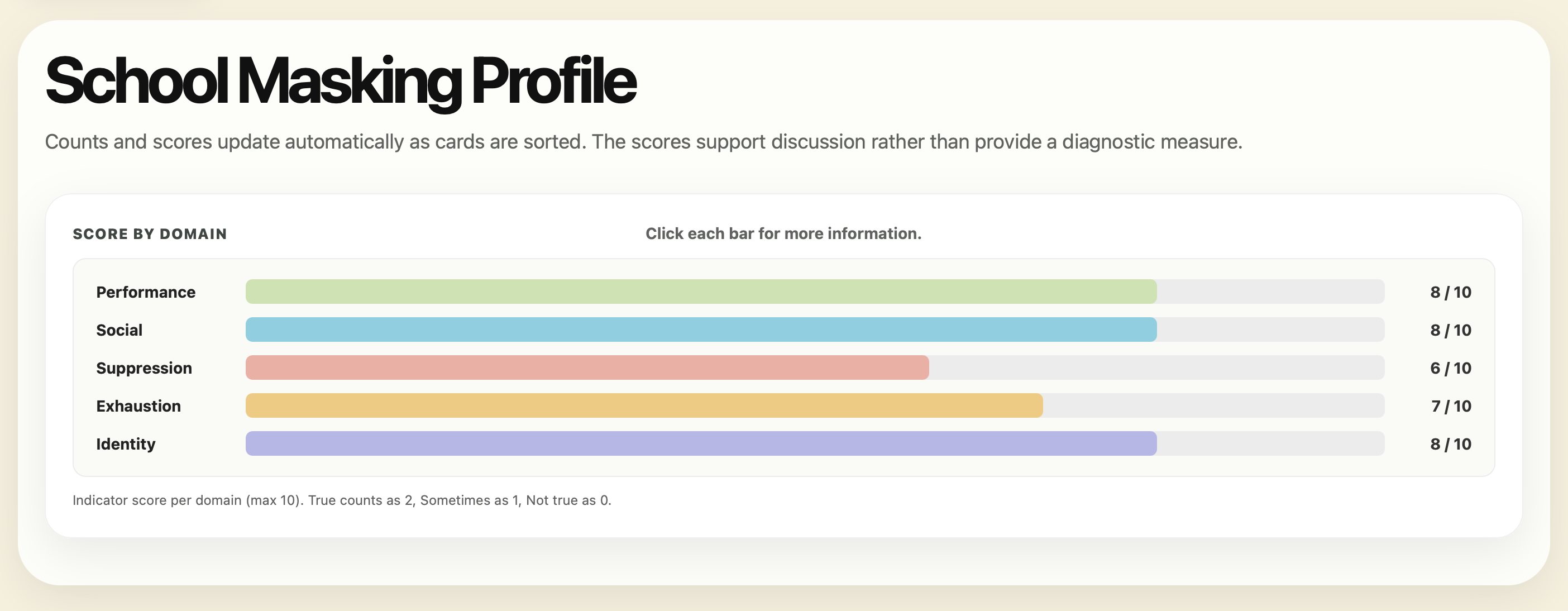
- Each domain score in the profile, out of 10, sums up how a pupil sorted the cards. It is a starting point for discussion and formulation, not a standardised measure of how much a pupil masks. The scores can be useful for seeing how things change for a pupil over time (e.g., before and after a change at school). They are best read as part of a conversation, rather than as exact measurements. They are not meant for comparing one child with another, as there are no norms to compare against.
- Most of the research behind the scales is cross-sectional and based on self-report, and much of it is with adults. As Zhuang et al. (2023) point out, it also draws heavily on people who are autistic, White, and female. This means the findings show links between things, not what causes what. The direction of cause and effect is still an open question.
- The scales should always sit alongside the views of the child, their family and the staff who know them. The profile is one piece of the picture. It should not be read on its own.
Conclusion: looking beyond surface presentation
Much of what the School Masking Scales try to notice is easy to miss. A pupil can look like they are managing, while quietly working very hard to hold things together. That effort often does not show at school, and sometimes only comes out later, at home. The scales are a way of noticing it, and of understanding a pupil's own experience alongside what the adults around them see.
They draw on research, but they are not a test, and they do not set out to label anyone. They give professionals, schools and families a shared starting point, a way to ask questions together about the effort a pupil is putting in and what might help. As masking can be shaped by the environment around a pupil, small changes to how a school feels and to how understood a pupil feels, can make a real difference. The School Masking Scales aim to help the people around a pupil understand, and to make school a place where they can feel safe, understood, and able to be themselves.
References
- Atkinson, E., Wright, S., & Wood-Downie, H. (2026). "Do my friends only like the school me or the true me?": School belonging, camouflaging, and anxiety in autistic students. Journal of Autism and Developmental Disorders, 56(6), 2231 to 2245. https://doi.org/10.1007/s10803-024-06668-w
- Bargiela, S., Steward, R., & Mandy, W. (2016). The experiences of late-diagnosed women with autism spectrum conditions: An investigation of the female autism phenotype. Journal of Autism and Developmental Disorders, 46(10), 3281 to 3294. https://doi.org/10.1007/s10803-016-2872-8
- Cage, E., & Troxell-Whitman, Z. (2019). Understanding the reasons, contexts and costs of camouflaging for autistic adults. Journal of Autism and Developmental Disorders, 49(5), 1899 to 1911. https://doi.org/10.1007/s10803-018-03878-x
- Connolly, S. E., Constable, H. L., & Mullally, S. L. (2023). School distress and the school attendance crisis: A story dominated by neurodivergence and unmet need. Frontiers in Psychiatry, 14, 1237052. https://doi.org/10.3389/fpsyt.2023.1237052
- Cook, J., Hull, L., Crane, L., & Mandy, W. (2021). Camouflaging in autism: A systematic review. Clinical Psychology Review, 89, Article 102080. https://doi.org/10.1016/j.cpr.2021.102080
- Halsall, J., Clarke, C., & Crane, L. (2021). "Camouflaging" by adolescent autistic girls who attend both mainstream and specialist resource classes: Perspectives of girls, their mothers and their educators. Autism, 25(7), 2074 to 2086. https://doi.org/10.1177/13623613211012819
- Howe, S. J., Hull, L., Sedgewick, F., Hannon, B., & McMorris, C. A. (2023). Understanding camouflaging and identity in autistic children and adolescents using photo-elicitation. Research in Autism Spectrum Disorders, 108, Article 102232. https://doi.org/10.1016/j.rasd.2023.102232
- Hull, L., Lai, M.-C., Baron-Cohen, S., Allison, C., Smith, P., Petrides, K. V., & Mandy, W. (2020). Gender differences in self-reported camouflaging in autistic and non-autistic adults. Autism, 24(2), 352 to 363. https://doi.org/10.1177/1362361319864804
- Hull, L., Mandy, W., Lai, M.-C., Baron-Cohen, S., Allison, C., Smith, P., & Petrides, K. V. (2019). Development and validation of the Camouflaging Autistic Traits Questionnaire (CAT-Q). Journal of Autism and Developmental Disorders, 49(3), 819 to 833. https://doi.org/10.1007/s10803-018-3792-6
- Hull, L., Petrides, K. V., Allison, C., Smith, P., Baron-Cohen, S., Lai, M.-C., & Mandy, W. (2017). "Putting on my best normal": Social camouflaging in adults with autism spectrum conditions. Journal of Autism and Developmental Disorders, 47(8), 2519 to 2534. https://doi.org/10.1007/s10803-017-3166-5
- Lai, M.-C., Lombardo, M. V., Ruigrok, A. N. V., Chakrabarti, B., Auyeung, B., Szatmari, P., Happé, F., Baron-Cohen, S., & MRC AIMS Consortium. (2017). Quantifying and exploring camouflaging in men and women with autism. Autism, 21(6), 690 to 702. https://doi.org/10.1177/1362361316671012
- Livingston, L. A., & Happé, F. (2017). Conceptualising compensation in neurodevelopmental disorders: Reflections from autism spectrum disorder. Neuroscience & Biobehavioral Reviews, 80, 729 to 742. https://doi.org/10.1016/j.neubiorev.2017.06.005
- Livingston, L. A., Shah, P., & Happé, F. (2019). Compensatory strategies below the behavioural surface in autism: A qualitative study. The Lancet Psychiatry, 6(9), 766 to 777. https://doi.org/10.1016/S2215-0366(19)30224-X
- McKinney, A., O'Brien, S., Maybin, J. A., Chan, S. W. Y., Richer, S., & Rhodes, S. (2024). Camouflaging in neurodivergent and neurotypical girls at the transition to adolescence and its relationship to mental health: A participatory methods research study. JCPP Advances, 4(4), e12294. https://doi.org/10.1002/jcv2.12294
- Nelson, T., & Lichwa, H. (2025). The lived experiences of masking Black autistic girls in UK education: "before people see the autism, they see my race". Educational Psychology in Practice, 41(4), 417 to 438. https://doi.org/10.1080/02667363.2025.2541211
- Pearson, A., & Rose, K. (2021). A conceptual analysis of autistic masking: Understanding the narrative of stigma and the illusion of choice. Autism in Adulthood, 3(1), 52 to 60. https://doi.org/10.1089/aut.2020.0043
- Perry, E., Mandy, W., Hull, L., & Cage, E. (2022). Understanding camouflaging as a response to autism-related stigma: A social identity theory approach. Journal of Autism and Developmental Disorders, 52(2), 800 to 810. https://doi.org/10.1007/s10803-021-04987-w
- Raymaker, D. M., Teo, A. R., Steckler, N. A., Lentz, B., Scharer, M., Delos Santos, A., Kapp, S. K., Hunter, M., Joyce, A., & Nicolaidis, C. (2020). "Having all of your internal resources exhausted beyond measure and being left with no clean-up crew": Defining autistic burnout. Autism in Adulthood, 2(2), 132 to 143. https://doi.org/10.1089/aut.2019.0079
- Tierney, S., Burns, J., & Kilbey, E. (2016). Looking behind the mask: Social coping strategies of girls on the autistic spectrum. Research in Autism Spectrum Disorders, 23, 73 to 83. https://doi.org/10.1016/j.rasd.2015.11.013
- Wood-Downie, H., Wong, B., Kovshoff, H., Mandy, W., Hull, L., & Hadwin, J. A. (2021). Sex/gender differences in camouflaging in children and adolescents with autism. Journal of Autism and Developmental Disorders, 51(4), 1353 to 1364. https://doi.org/10.1007/s10803-020-04615-z
- Zhuang, S., Tan, D. W., Reddrop, S., Dean, L., Maybery, M., & Magiati, I. (2023). Psychosocial factors associated with camouflaging in autistic people and its relationship with mental health and well-being: A mixed methods systematic review. Clinical Psychology Review, 105, Article 102335. https://doi.org/10.1016/j.cpr.2023.102335